Highway Rush Overdrive — Field Guide to Traffic Gaps
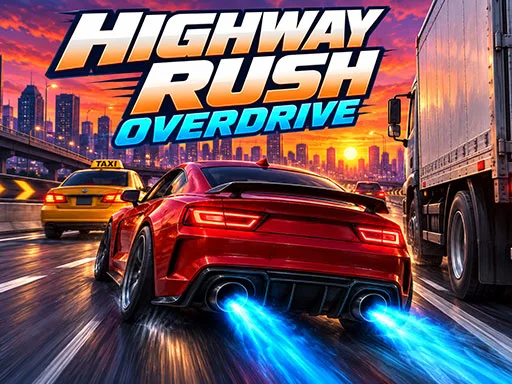
Highway Rush Overdrive has a concise supplier description: drive through a city highway, weave through traffic, chain near misses, and build toward an Overdrive state. That short outline is enough for a practical field guide because every named activity depends on reading space between moving vehicles. The game itself remains the authority for steering, speed, scoring, and the exact way Overdrive is activated.
Read the road before the speed
A highway scene often appears simple because most movement follows the same broad direction. The difficulty comes from differences in lane position and relative speed. Before choosing a gap, identify the boundaries of the current lane and compare nearby vehicles with those farther ahead. A small opening can change quickly when traffic is moving at different rates.
The supplier does not state how many lanes, cities, or vehicle types appear. A useful guide should therefore focus on the confirmed relationship between the player’s vehicle and surrounding traffic rather than inventing a road map.
Open the live highway
Use Highway Rush Overdrive to check the current controls and feedback. The Racing Games category provides an early route to other driving titles. Network permission and browser behavior may vary, but this page does not require a separate game installation supplied by the site.
Near misses depend on clear distance
A near miss is defined by proximity, so the scene must make distance readable. Vehicle size, lane markings, shadows, and motion can all help. The supplier says near misses can be chained; it does not define the allowed distance or the time between them. Those values should be learned from the live feedback.
Visual effects are most useful when they confirm an event and then clear. If they remain over the road, they can hide the next traffic gap. After a close pass, return attention to the lane structure and the vehicles still ahead.
Practical traffic checklist
- Locate the current lane and its nearest open space.
- Compare relative movement before entering a gap.
- Watch the road again immediately after a near miss.
- Read the live indicator for the Overdrive state.
- Avoid assuming that every opening remains available.
What Overdrive adds to the premise
The name Overdrive signals a heightened state, but the supplier does not explain its duration, effect, or activation threshold. It is accurate to say that near misses contribute to it; it would be speculative to promise invulnerability, a particular speed increase, or a multiplier.
This limit is useful. It keeps the guide centered on what can be observed: traffic positions, successive close passes, and a state that the interface should communicate. The player can then interpret the current indicator rather than relying on an invented rule.
Field conclusion
Highway Rush Overdrive turns traffic into a moving pattern of opportunities and risks. The road provides stable boundaries, other vehicles create changing gaps, and near misses connect those decisions to the named Overdrive system. A successful first reading is simple: understand the lane, compare motion, choose a gap, and reassess. Everything more specific belongs to the active game.