A Mimicry of Life — Field Guide to a Polar Mystery
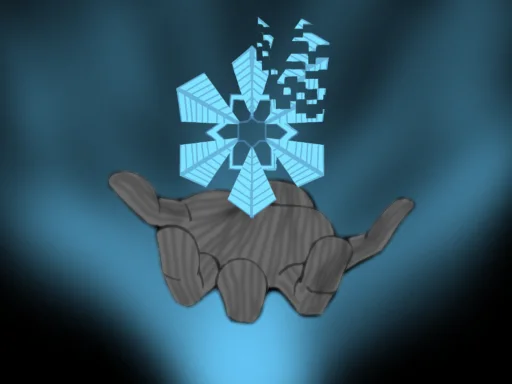
In A Mimicry of Life, a scientific expedition reaches the North Pole in 2057 to study an unusual fallen asteroid. The supplier presents the premise through questions: why are people behaving strangely, why is blood absent, and why are memories of the time before the expedition unclear? Those questions make the setting compelling, but they do not reveal the game's control scheme or a documented puzzle system. This field guide separates what the listing actually says from what remains for the player to discover.
Start with the known facts
The group includes geologists and scientists from other fields. Their destination is polar, and the object of study is an asteroid. The year is stated explicitly. Beyond that, the supplier leaves the causal story open. It would be misleading to identify an alien organism, a laboratory accident, or a particular antagonist from this short account.
The most useful first reading is therefore a simple inventory: place, team, object, and three unexplained observations. Keeping those items separate prevents a possible clue from being mistaken for an established answer.
Open the live expedition
The public page for A Mimicry of Life is the place to check the current instructions and presentation. The Puzzle Games category offers an early route to other games organized around investigation or problem solving. Being listed in that category does not itself prove a specific puzzle mechanic in this title.
Read questions before explanations
A mystery often works by controlling how much information arrives at once. Here, strange behavior is the first disturbance, the missing blood makes the situation more unsettling, and incomplete memory calls the expedition's own account into question. The supplier supplies these questions but no solution. An article should preserve that uncertainty rather than resolve it on the reader's behalf.
The North Pole gives the investigation an isolated context. Distance from ordinary settings can make a small inconsistency feel more significant. The asteroid supplies a central object around which attention gathers. Neither detail authorizes claims about a particular room layout, dialogue tree, or ending; those need direct confirmation from the game.
Practical observation checklist
- Read any opening instructions before assuming how movement works.
- Keep the stated year and expedition purpose in view.
- Separate observed behavior from guesses about its cause.
- Watch for how the game presents missing or uncertain memory.
- Use the running game, not this article, for exact interactions.
Why restraint helps this subject
Some game articles fill gaps with confident language about enemies, escape routes, collectibles, or endings. None of those is established by the supplied description. Restraint is especially important for a story built around uncertainty: invented facts would not merely be inaccurate, they would flatten the central mystery.
A more useful guide explains the lens through which to approach the premise. The expedition arrives with a scientific purpose. The people and their memories no longer fit an ordinary account. An asteroid is present, but its role remains unknown. Those relationships can guide attention without pretending to provide a walkthrough.
Field conclusion
A Mimicry of Life has a clear hook: a polar research trip becomes a sequence of troubling questions. The source confirms time, place, team, and object while withholding the explanation. Treating the unknown as unknown respects both accuracy and the game's atmosphere. If the live version supplies further evidence, it should be read there in context. Until then, this field guide offers orientation, not a manufactured solution.